
Commercial & Domestic Applications
Understanding which technology is right for your project can be the defining factor in success. Here we look at the different commercial and domestic applications for heat pump technologies to help you make the right choice.
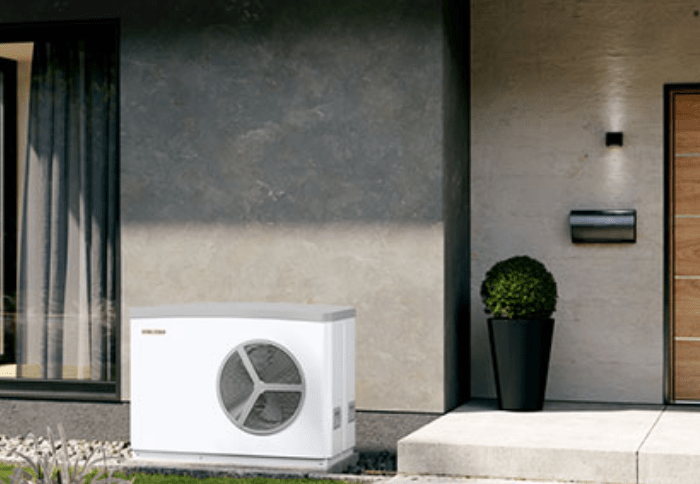
Air Source Heat Pumps
Ease of Installation: Air source heat pumps (ASHPs) are relatively easy to install compared to ground source systems, making them a convenient choice for homeowners.
Cost-Effective: They are generally more affordable upfront than ground source heat pumps, providing a quicker return on investment for residential users.
Space-Saving: ASHPs require less outdoor space, which is ideal for homes with limited yard space.
Versatility: These pumps can efficiently heat and cool homes, adapting to seasonal temperature changes with ease.
Scalability: Air source heat pumps can be scaled up to meet the heating and cooling demands of large commercial buildings.
Minimal Disruption: Installation in commercial settings is straightforward and causes minimal disruption to ongoing operations.
Flexibility: Suitable for various commercial properties, from office buildings to retail stores, providing consistent climate control.
Operational Cost Savings: Businesses benefit from lower energy bills and reduced maintenance costs over time.

Ground Source Heat Pumps
Efficiency: Ground source heat pumps (GSHPs) offer higher efficiency compared to air source systems, providing significant energy savings.
Durability: GSHPs have a longer lifespan due to their underground components being protected from weather conditions.
Stable Temperature Source: Utilizing the stable underground temperatures ensures consistent heating and cooling throughout the year.
Increased Property Value: The installation of a GSHP can increase the value of a home due to its eco-friendly and cost-saving benefits.
High Efficiency for Large Scale: Ideal for large commercial properties, GSHPs can handle substantial heating and cooling loads efficiently.
Long-Term Savings: While the initial investment is higher, the long-term operational savings and reduced maintenance costs make GSHPs a smart choice for businesses.
Sustainability: Adopting GSHPs demonstrates a commitment to sustainability, enhancing the company’s green credentials and potentially attracting eco-conscious customers.
Enhanced Comfort: Provides consistent indoor climate control, improving comfort for employees and customers alike.
Key Differences between GSHP and ASHP
Air Source: Easier and less invasive, typically installed on external walls or rooftops.
Ground Source: Requires ground excavation or drilling, which is more labour-intensive and costly.
Air Source: Efficiency can vary with outdoor temperatures.
Ground Source: Consistently high efficiency due to stable underground temperatures.
Air Source: Requires minimal space; ideal for properties with limited outdoor areas.
Ground Source: Requires significant land area for horizontal loops or deep drilling for vertical loops.
Air Source: Lower initial cost and quicker installation.
Ground Source: Higher initial cost but offers greater long-term savings.
Air Source: Generally, requires more frequent maintenance due to exposure to the elements.
Ground Source: Lower maintenance needs as underground components are protected from weather-related wear and tear.
