Energy Bills Are Rising Again. Could a Heat Pump Help Protect Your Home from Future Price Hikes?
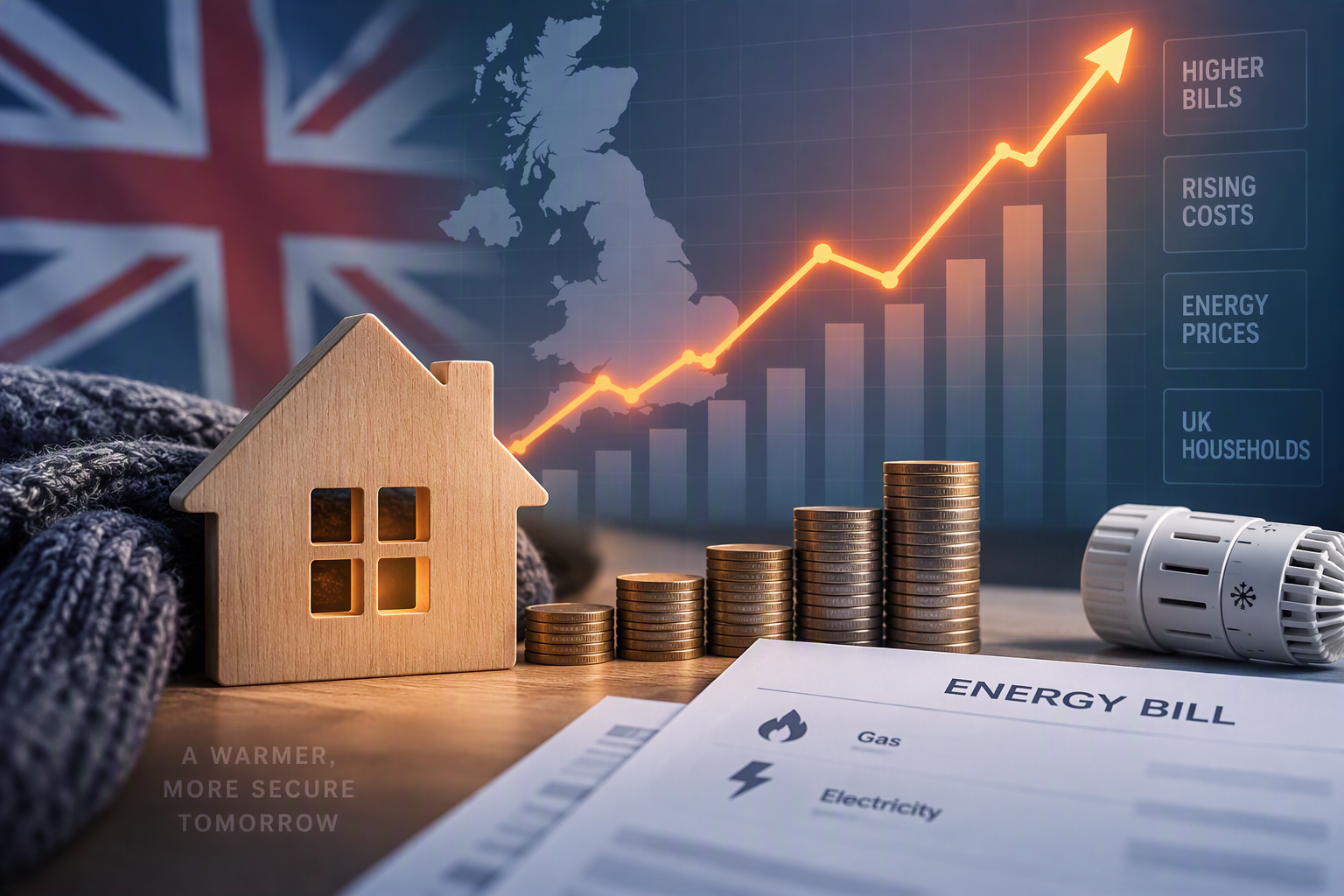
UK households are preparing for another increase in energy costs this autumn, with Ofgem’s latest energy price cap rising by 4% from 1 October 2026. For the average household, that means annual energy costs increasing to around £1,723, with much of the increase being driven by higher gas prices. Energy price cap will rise by 4% from October 2026 reports that gas costs are rising by around 8%, while electricity prices remain broadly stable.
For many homeowners, this latest announcement raises an important question:
How can I reduce my exposure to rising energy costs in the future?
One option receiving increasing attention is the heat pump.
Why Are Energy Bills Going Up Again?
The UK remains heavily influenced by global gas markets. When wholesale gas prices rise, household energy bills often follow. Recent increases have been linked to continued volatility in international energy markets, meaning many homes that rely on gas boilers could see their heating costs rise just as winter approaches.
While nobody can predict future energy prices with certainty, many homeowners are looking for ways to reduce their dependence on fossil fuels and improve the efficiency of their heating systems.
How Efficient Are Heat Pumps?
Unlike a traditional gas boiler, which creates heat by burning fuel, a heat pump transfers existing heat from the air or ground into your home.
This makes heat pumps incredibly efficient. Rather than generating one unit of heat from one unit of energy, a well-designed heat pump can deliver multiple units of heat for every unit of electricity it consumes.
That efficiency is one of the key reasons heat pumps are becoming increasingly popular across the UK. The market continues to grow steadily as more homeowners seek lower-carbon alternatives to conventional heating systems.
Can a Heat Pump Cost Less to Run Than a Gas Boiler?
The answer is: sometimes, yes.
One of the biggest misconceptions about heat pumps is that because they run on electricity, they must automatically cost more.
In reality, the running costs depend on several factors, including:
- The efficiency of the heat pump
- How well insulated the property is
- The heating system design
- The electricity tariff being used
- The cost of gas at any particular time
As gas prices rise faster than electricity prices, the gap between the two narrows. Recent analysis shows that the latest energy price cap changes have improved the economics of heat pumps by increasing gas costs more significantly than electricity costs.
For many modern, well-designed systems, a heat pump can be competitive with, or even cheaper to run than, a gas boiler, while also reducing carbon emissions.
Installation Quality Matters
It is important to be realistic.
A heat pump is not a magic box that automatically guarantees lower bills.
The best results come from a properly designed system that takes into account:
- Heat loss calculations
- Correct system sizing
- Appropriate radiator or underfloor heating design
- Hot water requirements
- Building insulation levels
As highlighted in our Air Source Heat Pump page, the entire heating system must be designed correctly if homeowners are to achieve maximum efficiency and lower running costs.
When installed and commissioned correctly, heat pumps can provide consistent comfort, reliable hot water and potentially lower long-term energy costs
Government Support Is Still Available
Many homeowners are surprised to learn that government support remains available for heat pump installations.
The Boiler Upgrade Scheme currently offers grants of up to £7,500 towards eligible heat pump installations in England and Wales, helping to reduce the initial investment required. Boiler Upgrade Scheme grant is designed to encourage the replacement of traditional fossil fuel heating systems with low-carbon alternatives.
For homeowners already concerned about rising energy costs, this funding can make the transition far more accessible.
Looking Beyond the Next Price Rise
While the latest energy price cap increase may only add a few pounds per month to the average bill, it serves as another reminder that energy prices remain unpredictable.
Improving the efficiency of your home can help reduce your exposure to future price fluctuations while improving comfort and reducing carbon emissions. For many households, a heat pump could form an important part of that strategy.
The key is understanding whether it is the right solution for your property.
Thinking About a Heat Pump?
If you’re concerned about rising energy bills and would like to explore whether a heat pump could work for your home, the team at Nuenta Clarke Talbot can help.
Our specialists can assess your property, explain the options available, estimate potential running costs, and advise on available grant funding.
Get in touch today for a no-obligation discussion and discover whether a heat pump could help future-proof your home’s heating costs.
📞 Contact Nuenta Clarke Talbot today to request a heat pump consultation
🌐 Enquire online and speak to one of our renewable heating specialists