Why is ventilation important?
A Healthier, More Comfortable Home Without Wasting Energy
When people think about creating a comfortable home, they often focus on heating, insulation and glazing. But one of the most important aspects of a healthy, energy-efficient home is something many homeowners rarely think about: ventilation.
Modern homes are designed to be increasingly airtight to reduce energy loss. While this is excellent for lowering heating bills, it can also create a hidden problem. Without adequate ventilation, moisture, pollutants and stale air become trapped indoors, affecting both the building and the people living in it.
The good news is that modern Mechanical Ventilation with Heat Recovery (MVHR) systems allow homes to stay well-ventilated without sacrificing warmth and efficiency. Some advanced systems can even provide cooling and supplementary heating through an integrated heat pump.
Why Do Homes Need Ventilation?
Every day, our homes generate moisture and airborne pollutants through normal activities such as:
- Cooking
- Showering and bathing
- Drying clothes indoors
- Cleaning products
- Breathing and sleeping
Without effective ventilation, these contaminants can build up, leading to:
Condensation and Damp
Excess moisture can settle on cold surfaces, creating condensation. Over time, this can lead to damp patches, mould growth and damage to the building fabric.
Poor Indoor Air Quality
Stale indoor air can contain elevated levels of carbon dioxide (CO2), allergens, dust and volatile organic compounds (VOCs) released from furnishings, cleaning products and building materials.
Health Concerns
Poor air quality has been linked to respiratory issues, allergies, headaches and disturbed sleep. Fresh, filtered air helps create a healthier living environment for everyone in the home.
The Challenge with Traditional Ventilation
Many older homes rely on trickle vents, extractor fans and opening windows to bring in fresh air.
While these approaches can provide ventilation, they come with a major drawback: heat loss.
Every time warm air leaves the building, the heating system must work harder to replace the lost warmth. As energy costs continue to rise, simply opening windows throughout winter is far from an efficient solution.
How MVHR Solves the Problem
Mechanical Ventilation with Heat Recovery (MVHR) offers a smarter approach.
An MVHR system continuously extracts stale, humid air from bathrooms, kitchens and utility rooms while simultaneously supplying fresh, filtered air to living spaces and bedrooms.
The clever part is the heat recovery process.
As warm air is extracted from the home, the system recovers much of that heat and transfers it to the incoming fresh air before it enters the property. This means the home receives a constant supply of fresh air without the significant heat loss associated with opening windows. MVHR systems commonly recover a large proportion of the heat that would otherwise be lost through ventilation.
Benefits of MVHR
Fresh Air All Year Round
Fresh, filtered air is constantly supplied to the home, helping occupants enjoy a healthier indoor environment.
Reduced Risk of Damp and Mould
Continuous moisture extraction helps control humidity levels and reduces the likelihood of condensation.
Greater Energy Efficiency
By recovering heat from outgoing air, MVHR systems help reduce the demand on the heating system and improve overall energy efficiency.
Improved Comfort
Rather than experiencing cold draughts from open windows, occupants benefit from a controlled, comfortable indoor environment throughout the year.
Can MVHR Help Keep Your Home Cool?
Many people are surprised to learn that ventilation can also contribute to summer comfort.
Standard MVHR systems can help reduce overheating by continuously replacing warm indoor air with cooler fresh air. Some systems also include summer bypass modes that prevent unwanted heat recovery when outdoor temperatures are lower than indoor temperatures.
However, cooling capabilities become even more impressive when a heat pump is integrated into the ventilation system.
Cooling Without Traditional Air Conditioning
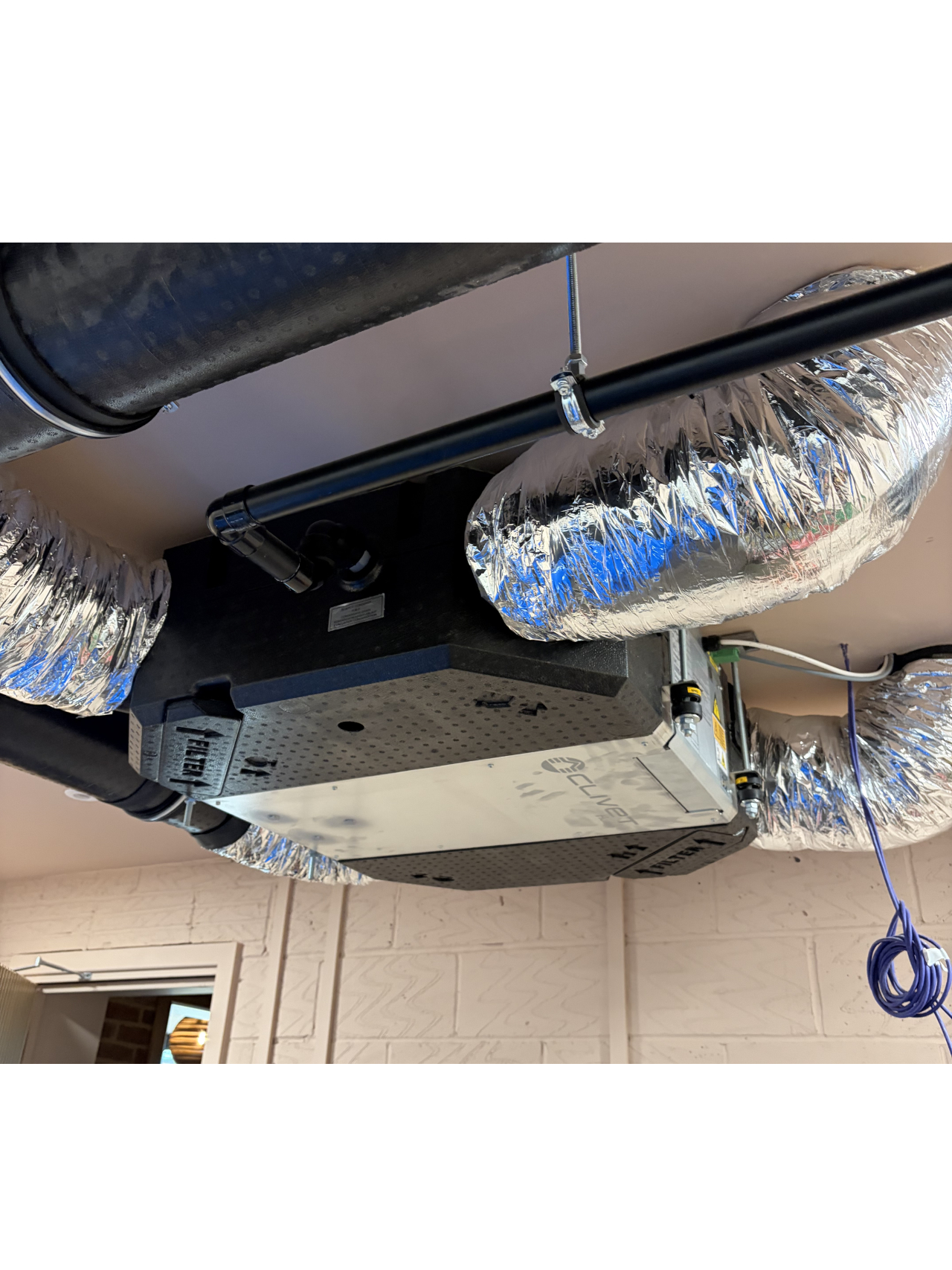
Advanced thermodynamic MVHR systems combine ventilation, heat recovery, heating and cooling in a single unit.
Systems such as the Clivet ELFOFresh range feature a built-in heat pump that can deliver both heating and cooling through the same ventilation ductwork used for fresh air distribution. According to internal NCT documentation, these systems can provide ventilation, heating and cooling from a single ceiling-mounted unit, removing the need for separate cooling equipment in many applications.
This approach offers several advantages:
- No wall-mounted air conditioning units.
- No external condensers.
- Fresh air, heating and cooling from one integrated system.
- Improved comfort throughout the year.
- Reduced installation complexity compared to multiple separate systems.
For homeowners concerned about overheating in modern, well-insulated properties, integrated MVHR and heat pump technology can provide an attractive alternative to traditional air conditioning while maintaining excellent indoor air quality.
The Future of Home Comfort
As homes become more energy-efficient and airtight, effective ventilation is no longer optional, it’s essential.
A well-designed MVHR system helps maintain healthy indoor air quality, protects the building from moisture-related problems and reduces unnecessary heat loss. For those seeking even greater comfort, modern thermodynamic MVHR systems can add heating and cooling capabilities, delivering year-round comfort from a single integrated solution.
At Nuenta Clarke Talbot, we believe ventilation should be considered alongside heating and insulation as a core part of every energy-efficient home. When designed correctly, it can transform not just how a home performs, but how it feels to live in every day.